Large-Scale Home Renovations in Revelstoke
Structural transformations of existing buildings. Not cosmetic updates.
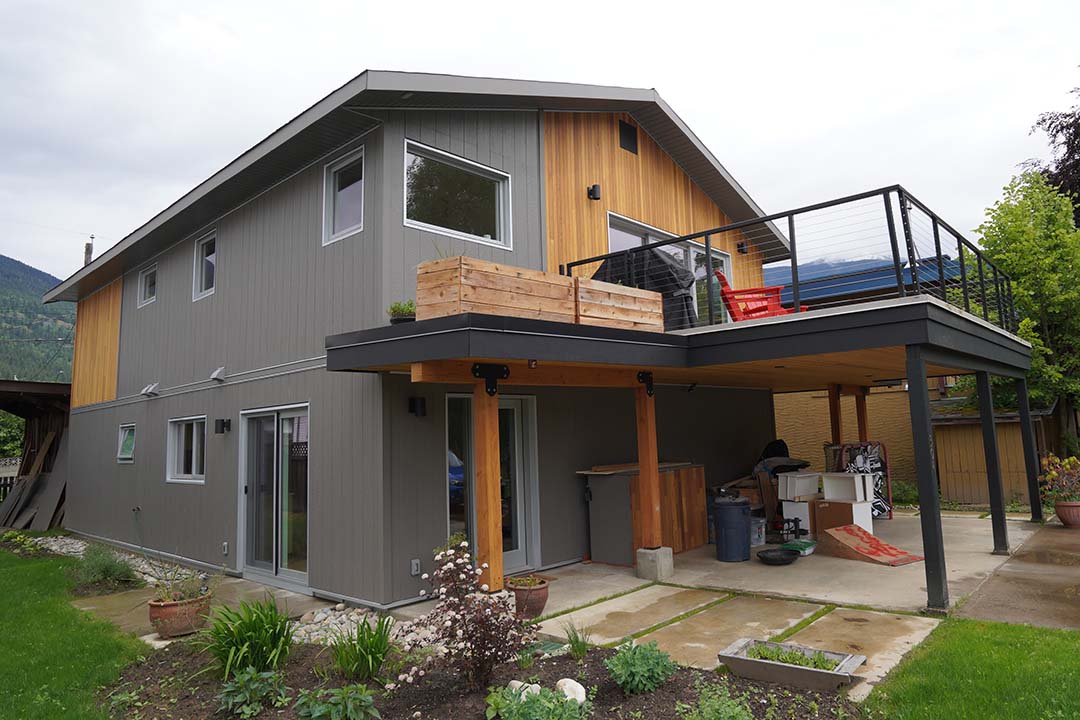
Our renovation projects involve changing the structural bones of a building. Full gut-and-rebuild work. Second-story additions. Complete envelope replacement. Mechanical system overhauls. Floor plan reconfigurations that require engineering, permitting, and the same level of planning as new construction.
Our crews, our engineering relationships and our project management systems are set up for structural work, and we take a renovation from start to finish, so finishing work is part of every large renovation we do. The difference is one of scale. A small bathroom renovation on its own, a kitchen cabinet update or a small covered deck is work a smaller contractor in Revelstoke can take on and do very well, and projects at that size are usually better served that way. If you are not sure where your project sits, reach out anyway. We are always happy to point you in the right direction.
Most people assume renovating is simpler than building from scratch. The opposite is often true.
When you build new, you start with engineered plans and a clean site. With a large-scale renovation, you are working with what someone else built 20, 30, or 50 years ago. What they built may not match the drawings. It generally does not match the current building code. It almost certainly was not designed for what you want to do with it now.
When you open a wall expecting standard framing and find undersized lumber, no vapour barrier, and non-compliant insulation, the scope expands. The engineer needs to redesign the load path. The timeline shifts. The budget moves. That is manageable when planned for. It becomes a problem when it is not.
A renovation reaches this scale when the work goes past simple finishes like cabinet updates or new flooring and into the parts of the building that hold it up and keep the weather out. Once those are in play, the same engineering a new build needs comes with them. That is where the cost sits, and it is worth seeing why.
The structure comes first. We reinforce or replace the foundation, upgrade the load-bearing walls and add steel beams where the new layout needs them, then bring the roof structure up to current requirements.
Opening the building envelope means rebuilding it to today's standard: new insulation, vapour barrier, air barrier, windows, and doors. This is where Step Code compliance lives, because the rebuilt portions have to come up to the current energy standard.
The mechanical systems the old house ran on rarely suit the new one, so heating, ventilation, plumbing, and electrical are replaced, often including HRV systems that did not exist when the home was built.
Changing how the house lives means moving or removing load-bearing walls, changing room layouts, and adding or relocating bathrooms and kitchens, and each of those changes carries engineering with it.
And once the structure, envelope, and systems are in place, the interior goes back together from the studs in: new framing, drywall, flooring, trim, cabinetry, and fixtures.
A project like this has more in common with new construction than with the renovations most people picture. It is taking a building apart and putting it back together as something fundamentally different, and the budget follows the engineering rather than the finishes.
On a new build the designer starts from a clean site and known conditions, so one firm can draw the house and another can build it. In a renovation the building that is already standing sets the limits, and what turns up once the walls are open changes the design partway through the job.
Renovations are full of unknowns. You do not know what is inside those walls until you open them. In the traditional model, every surprise triggers a redesign cycle: the architect revises, the engineer recalculates, permits get updated, and the builder waits.
In our integrated process, the design team and the construction crew are the same team. When we open a wall and find a surprise, the people who can redesign around it are already on the project.
We have been opening walls in Revelstoke since 2005. We know which eras of construction used what materials, which neighbourhoods have foundation issues, and what inspectors look for at each stage.
An engineer evaluates the existing foundation, framing, and roof. We test for hazardous materials. We document all of it before the design work starts, so the drawings are based on the building as it actually is.
We design the renovation around what the structure can support and what it needs. Work is phased around the Revelstoke build season, with exterior work planned into the April-to-October window and interior work running year-round. We also build contingency into the budget for what the walls may reveal once demolition begins.
One team managing demolition, structural work, envelope, mechanical systems, and finishing, with one point of contact across all of it. When surprises come up behind a wall, the people who can redesign around them are already on the project.
Complete project documentation: permits, engineering drawings, product warranties, and specifications. Workmanship on the renovation is backed by Straight Up directly. The 2-5-10 year home warranty that applies to new construction in BC does not normally apply to renovation work on an existing building. The exception is a renovation that goes far enough to count as a new home under the Homeowner Protection Act: if 75 percent or more of the structure above the foundation ends up new, BC Housing treats the project as substantially reconstructed, and residential builder licensing and home warranty insurance apply. We flag that early in design, because it changes both the paperwork and the coverage. The same stage-by-stage sequence, set out end to end, is on our process page.
The quickest way to tell is to look at what the work touches. If your project changes the structure of an existing building, if the scope reaches into the foundation, framing, or envelope, and the work needs engineering and a full building permit before it can happen at all, this is the work we are built for. It is also where having one team manage design and construction matters most, because what turns up inside old walls changes the design as the project goes. If you are not sure which side of the line your project falls on, book a complimentary 15 minute call and we will tell you straight and point you in the right direction.
It depends on the condition of the existing structure. If the foundation and framing are sound, a major renovation can cost less than new construction. If the foundation needs replacing and the framing cannot handle current load requirements, building new may be the better path. We assess this during the initial structural evaluation.
Start with whether they are set up for structural work at all, because a renovation at this scale needs engineering and a full building permit before anything else happens. The practical questions from there are who does the engineering, how the load path gets redesigned when a wall comes open, and what happens to the schedule and the budget when demolition turns up something the drawings did not show. It is also worth asking to see permits and engineering drawings from finished projects rather than photographs alone, and finding out who your single point of contact will be for the length of the job.
A renovation reworks the building that is already standing, changing the structure, the envelope, the mechanical systems or the floor plan. The additions side of the work covers second-story additions, major rear and side extensions, carriage house builds, and conversions of an existing home into separate units. Plenty of projects sit in both, the second-story addition most obviously, since it adds space and reworks everything underneath it. That is why the structural assessment comes first, before anyone settles on a label. If yours leans toward adding or dividing space, our additions and extensions work covers it, including what the 2025 zoning bylaw now allows on a residential lot.
It depends on how much of the house the work reaches, but typically no. At this scale the heating, ventilation, plumbing and electrical are usually replaced and the envelope is opened up, so the parts of the house under construction are not habitable while that work runs. Whether any other part can stay occupied is a question of scope and sequence, and it is one to raise early, while the design is still being set rather than after demolition has begun. The structural assessment and the design stage are where the answer gets worked out, at the same time as the phasing around the Revelstoke build season.
Revelstoke has required Step 3 of the BC Energy Step Code since January 2022, and a major renovation brings it into scope as soon as the work changes the building envelope. The requirement lands on the renovated portions rather than the whole house, so those areas need to meet current insulation, airtightness, and ventilation standards. We handle the energy modelling and testing as part of the project.
Typically 9 to 12 months of construction depending on scope and what the walls reveal, on top of 6 to 9 months of design and 6 to 8 weeks for permits. Exterior work is planned into the April-to-October window, and interior work continues year-round. Winter work is possible but not optimal and can add cost.
We take on renovations that change the structure of the building: full gut-and-rebuild work, second-story additions, complete envelope replacement, mechanical overhauls, and floor plan changes that need engineering and a full building permit. That is the line, rather than a dollar figure. Once a renovation reaches into the structure, it carries the same engineering, permitting, and planning as new construction, and our process and project management systems are built around that. Smaller renovations are better served by contractors who specialize at that scale, and we are always happy to point you toward the right people in Revelstoke.
For most renovations, no. The 2-5-10 year home warranty is required for new construction, and a renovation of an existing building sits outside it. Workmanship on your renovation is backed directly by Straight Up, and any new products, appliances, and systems carry their own manufacturer warranties, which we document and hand over at project completion. The exception is a renovation that goes far enough to become a new home in the eyes of BC Housing. If 75 percent or more of the structure above the foundation ends up new, BC Housing treats the project as substantially reconstructed under the Homeowner Protection Act, and at that point builder licensing and 2-5-10 warranty insurance apply. BC Housing makes that call project by project, and we raise it during the structural assessment so it never arrives as a surprise.

Throughout my tenure as Senior Building Inspector, Straight Up Construction has completed a substantial portfolio. Their projects have ranged from small staircases, to large scale commercial buildings from start to finish. I would highly recommend Straight Up Construction as quality builders and general contractors.
I have been a Building Official in Revelstoke since 2010. The owner and I have had a good working relationship. They continue to demonstrate a high level of competence and understanding in major aspects of the Building Code including permitting process and inspection requirements. I recommend Straight Up Construction as a competent new home builder.
I am a general contractor and builder in Adelaide, South Australia and have completed several substantial construction projects. I consider Straight Up Constructions a very competent builder and general contractor. They have a very good knowledge of the industry and the building code. Their attention to detail is commendable and management is very conscious of the safety of their crew. They completed both our projects in a timely fashion and I was very happy with the quality of work. I am more than happy to recommend Straight Up as builder of larger residential homes.